The third option is to qualify supervisors internally. Done well, it shifts the unit from buying a serial each time to running the capability on its own calendar, with external support reserved for the parts that genuinely need it. Done badly, it produces a cohort of supervisors with a certificate and no clear path to keeping it deployable.
This article walks through how that qualification path works for an ADF unit. What the role covers, how the qualification is structured, how 7th Brigade and 1st Brigade have used it, and the unsexy currency component that decides whether the qualification holds up beyond the first 18 months.
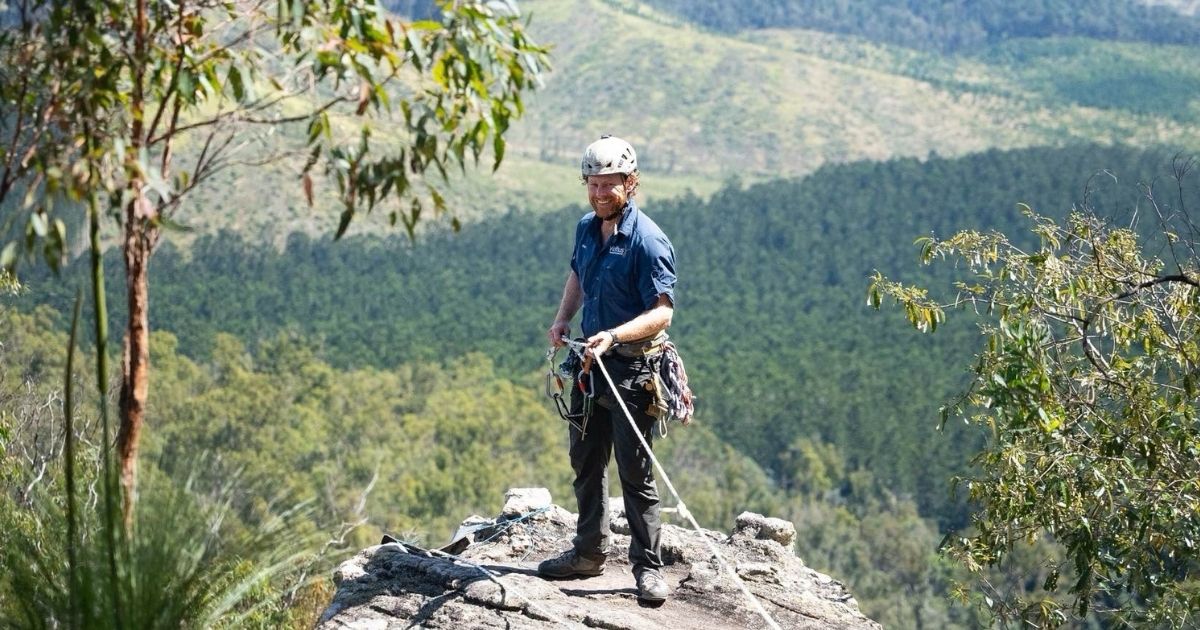
An abseiling safety supervisor is the person responsible for the safe delivery of an abseiling activity at a specific site. Not "involved in." Responsible for. Their job covers six discrete components:
The qualification is activity-specific. Abseil supervision is a different qualification from white-water supervision, which is a different qualification again from sea-kayak supervision. Most units start with abseil and climbing supervision because the tower-based capability is the most procurement-aligned with the infrastructure brigades already have.
The qualification path has three components. They run sequentially and the third one is what most units underestimate. Keltus delivers qualification courses over a five - 14 day period where we cover the following:
Theoretical foundation. Equipment standards and the reasons behind them. Safety system design and the failure modes each system is designed against. AAAS-aligned procedures and how they translate into the unit's operating context. Risk management as a working practice, not a paperwork exercise. Environmental awareness across artificial structures and natural sites within the activity scope.
Practical assessment. Operating the safety system under instructor observation across a representative range of scenarios. Demonstrating fault response when a system component does not behave as expected. Demonstrating participant management when the participant is the variable, not the equipment. The candidate is signed off when they can run the activity without instructor intervention and can articulate why they made the calls they made.
Currency requirements. Annual or bi-annual refresher to keep the qualification deployable. The interval depends on the activity, the supervisor's frequency of operation, and the standards body's requirements at the time. Without currency, the qualification lapses. The Section 4 conversation below is for the unit serious about not letting that happen.
The qualification is delivered by a nationally accredited organisation, Keltus delivers the supervisor qualification as a third-party provider for an established RTO partner. The training is signed off against nationally recognised units of competency, which means the qualification is portable across postings and recognised by other AAAS-aligned providers.
For the broader picture of how the qualification sits inside an in-house capability build, see the full capability-build playbook or the defence cornerstone.
Two engagement examples. Both confirm the same structural point: the qualification is one component of a capability, not the capability itself.
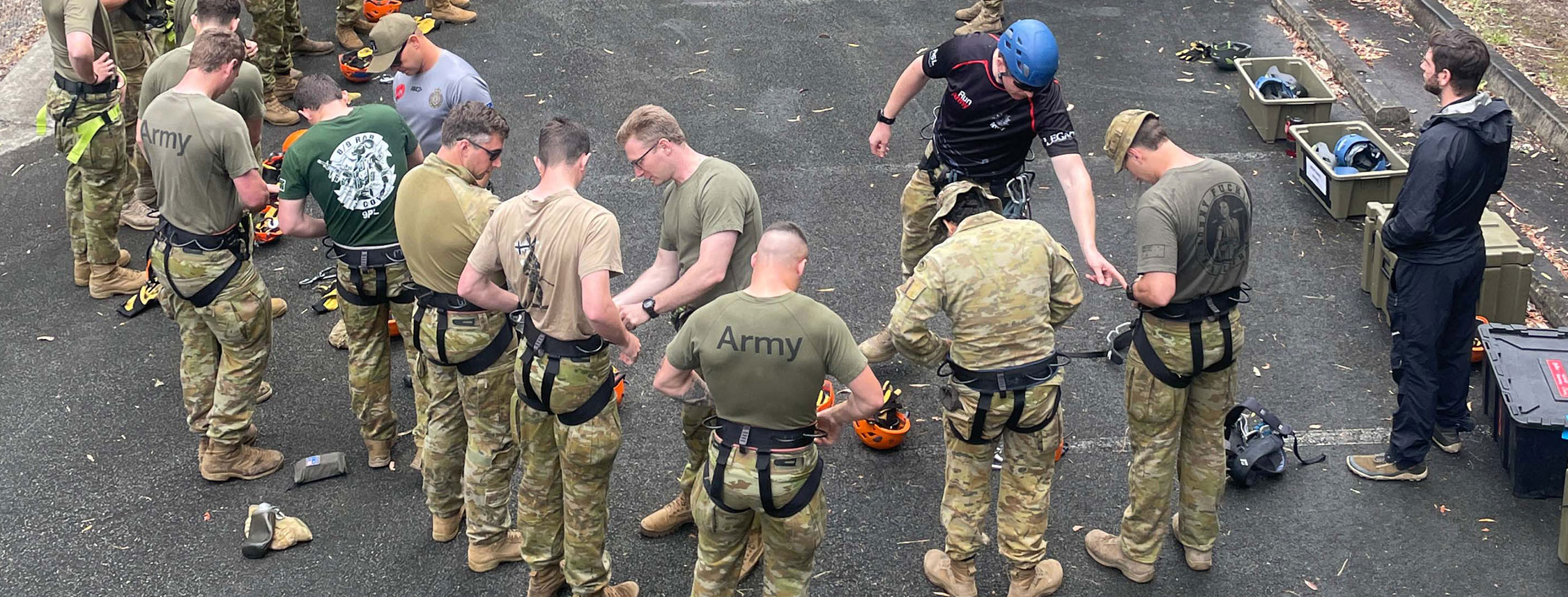
7th Brigade, Australian Army. Brigade personnel were trained as abseiling and climbing safety supervisors to operate the Climbing, Roping and Rappelling Tower at Gallipoli Barracks. The supervisor cohort sat alongside the governance and quality assurance framework Keltus wrote, the site-specific operating procedures, and the risk management framework. Combined, the three components let the Brigade deliver resilience training at scale on its own infrastructure. Keltus continues to provide currency training, mentoring and capability enhancement against the original cohort which includes 15 safety supervisors delivering resilience training to over 1000 soldiers annually.
1st Brigade, Australian Army. Brigade personnel were trained as abseiling and climbing safety supervisors to enable the safe delivery of large-scale resilience training activities. The qualification path is portable across brigades; the same training translates onto different brigade infrastructure and into the natural environments the unit chooses to use.
The contrast worth noting: the supervisor cohort is necessary but not sufficient. A brigade that qualifies supervisors and stops there has people with a certificate. A brigade that qualifies supervisors, writes the governance framework, stands up an equipment register, and invests in currency has a capability. The 7th Brigade engagement is the worked example of all four components in place.
For the full capability-build narrative, see Standing Up an In-House Resilience Training Capability.
This is the conversation most units skip and most regret. Currency is what keeps the qualification deployable. Most units that qualify supervisors but do not invest in currency see the cohort's qualification lapse within 12 to 18 months. The capability disappears with it.
What this typically looks like in practice:
Without these, the supervisor qualification is a perishable asset. The cost of a currency program is materially less than the cost of qualifying a fresh cohort every two years, and considerably less than the cost of an incident on the line because the cohort had not seen a fault response since their initial assessment.
Qualifying supervisors internally is the highest-leverage move a unit can make in adventurous training capability. The path is well-trodden, the providers are accountable to the AAAS, and the cost-to-capability ratio over a posting cycle is materially better than long-run external delivery. For the cost framing in detail, see the cost-to-capability ratio framework.
If you are scoping the path for your unit, the conversation starts with where you are now and what you want to deliver internally. A 20-minute call to talk through your unit context, your training intent, and the existing infrastructure you are working with is the cleanest place to begin. From that conversation, Keltus returns a written scope covering the qualification cohort size, the delivery window, the governance support if you need it, and the currency program to keep the capability deployable.
Discuss your training needs with the team behind this work at the Defence cornerstone.


.png)