Done well, the brigade owns the capability for ten years and stops paying external delivery costs on every serial. Done badly, the qualification cohort drifts out of currency in twelve months and the brigade quietly returns to outsourcing.
Most brigades that try to build the capability internally focus on layer 1 (qualified people) and miss the others. That is why one-off qualifications often fail to translate into delivered training. The capability is the stack, not the people.
Layer 1: Governance framework & Operating Model. Site-specific operating procedures, risk management framework, operational manuals, quality assurance system. This is the layer the brigade's command-level audit will read first. Without it, the safety story collapses on the first scrutiny pass and the capability cannot be run at scale. This is the layer most often skipped, and it is the layer where practitioner experience earns its fee.
Layer 2: Qualified people. Safety supervisors trained against Nationally recognised Vocational Education and Training Units of Competency or qualifications and the Australian Adventure Activity Standards (AAAS) and the corresponding Good Practice Guides, with currency maintained on a defined cycle. For a tower-based capability, this is the abseiling and climbing safety supervisor cohort. The qualification path itself sits in the full safety supervisor qualification path.
Layer 3: Equipment and infrastructure. The kit, the inspection register, the storage and maintenance discipline. For tower-based capability, the inspection and certification regime that keeps the structure insurable. Equipment without the inspection discipline produces a capability that cannot be insured in a year's time. The discipline is the asset, not the kit.
Layer 4: Mentoring and currency. Ongoing relationship with an external partner that maintains the supervisor cohort's currency, conducts refreshers, and provides escalation cover when internal supervisors meet a situation outside their training. This is the layer that decides whether the capability sustains for ten years or quietly degrades over two.
Each layer is necessary. Missing any one of the four collapses the capability over time. The order matters too: qualified people first, governance written by people who have to use it, equipment designed around how the capability will run, currency relationship locked in before the build hands over.
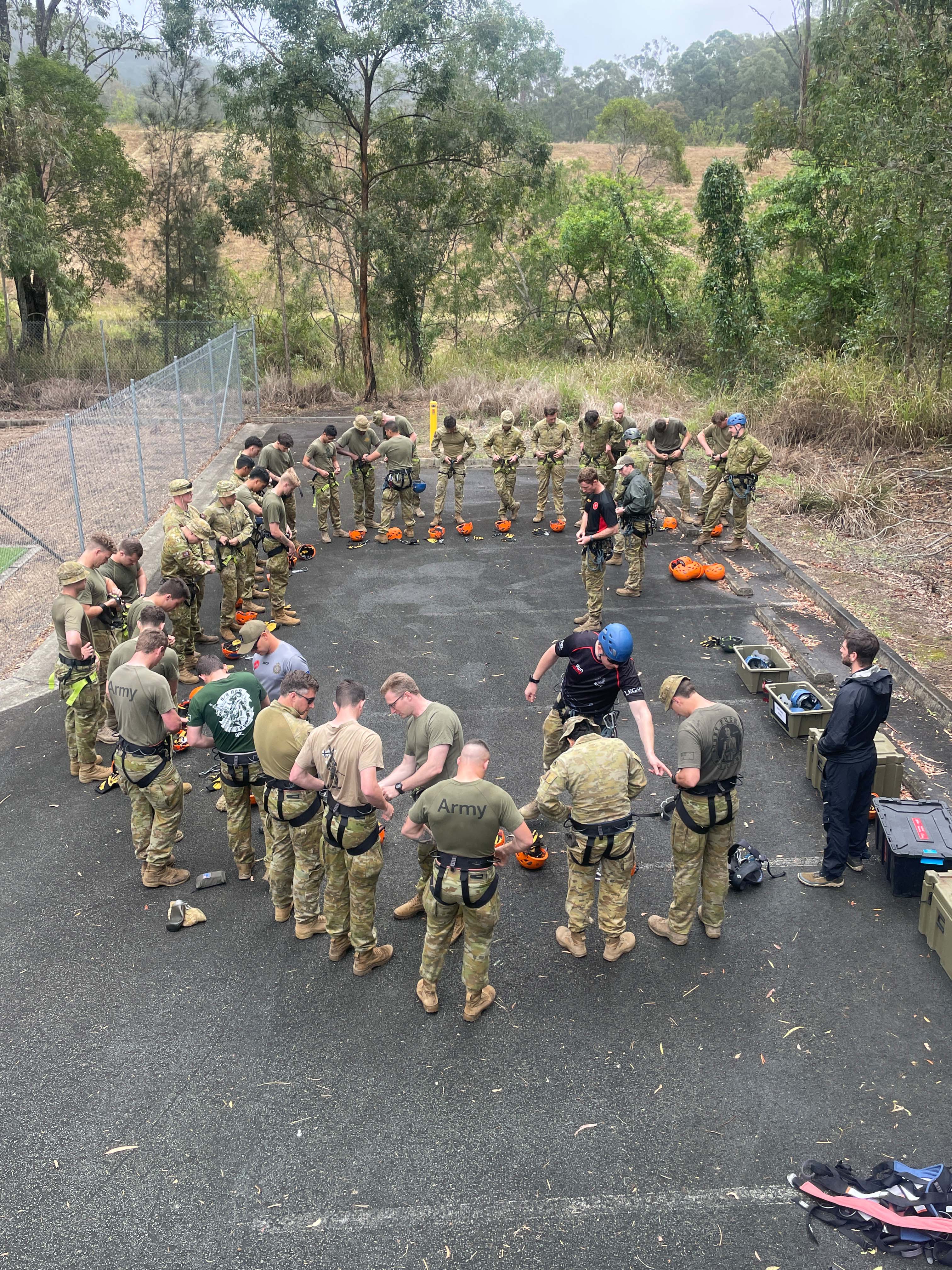
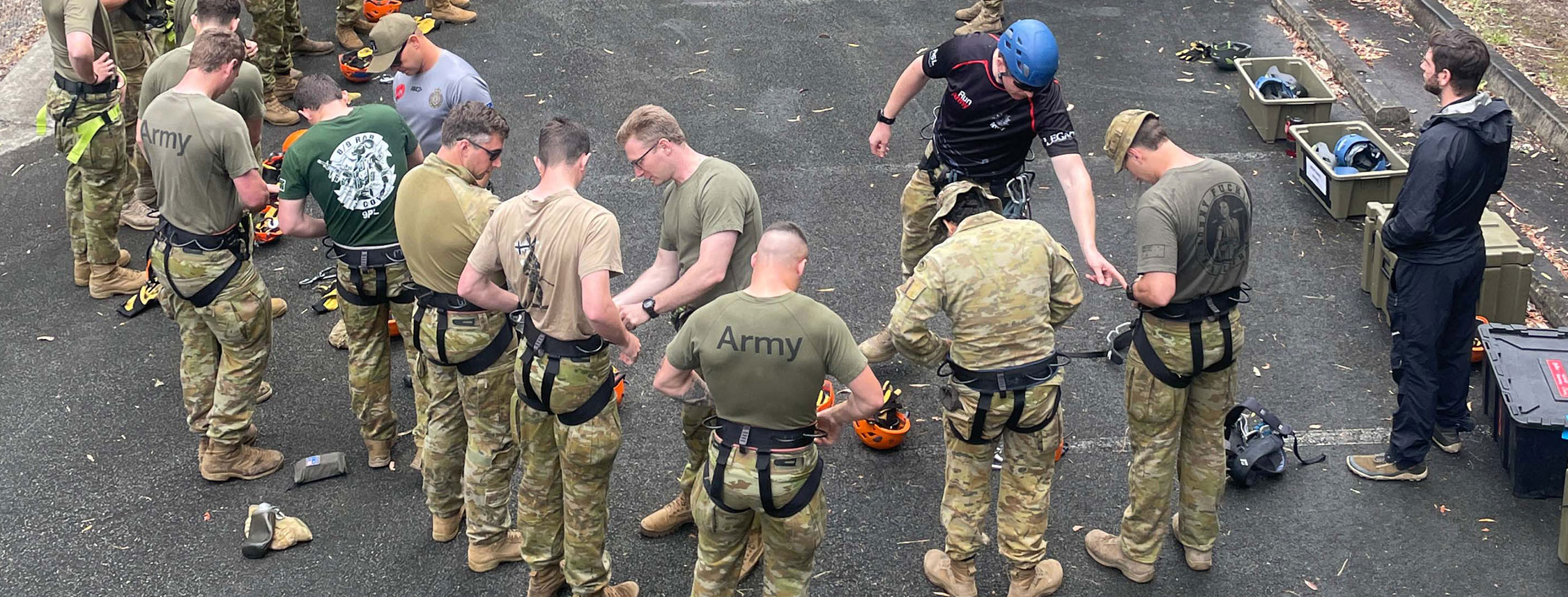
7th Brigade at Gallipoli Barracks in Brisbane is the cleanest example we have of the four-layer build. The starting position was infrastructure without capability. The Brigade had the Climbing, Roping and Rappelling Tower. They needed the resilience training capability to run on it.
Layer 1 (People): Keltus trained Brigade personnel as abseiling and climbing safety supervisors. Not a one-shot course; a qualification cohort sized to the throughput the Brigade needed to deliver annually.
Layer 2 (Governance): Wrote the governance and quality assurance framework. Produced the site-specific operating procedures, risk management frameworks and operational manuals required for the Brigade to deliver resilience training at scale. The documents are the artefact a CO can show a Brigade Commander or an external auditor without follow-up questions.
Layer 3 (Equipment): Established the inspection and certification regime around the tower and the associated equipment. The discipline that keeps the kit insurable and the activity defensible.
Layer 4 (Quality Assurance): Continues to provide currency training, mentoring, and capability enhancement activities. The Brigade is not on its own with the capability; the relationship is structured to maintain the supervisor cohort and to cover escalation when it is needed.
Outcome: 7 Bde now sustains over 15 qualified safety supervisors delivering resilience training activities to over 1000 soldiers annually without external delivery support"
The deeper, named-engagement narrative sits in the 7th Brigade case study and in what we built and continue to sustain. The piece you are reading is the methodology playbook. The case study is the story.
The procurement question every brigade S3 will ask first is timeline. The honest answer is that the build phase typically runs six to twelve months from kickoff to first internally-delivered training day. The variables that move the number are the supervisor cohort size, the scope of governance documentation required, and the starting condition of the equipment and infrastructure.
After the build, the capability runs on an annual cycle. Currency training for the supervisor cohort. Refreshers when supervisors approach the edge of their currency window. Governance reviews against the AAAS and the Brigade's own quality assurance system. Capability enhancement as the Brigade's training intent evolves.
The procurement-grade framing for the cost is a lifecycle view rather than a one-off price. Up-front investment in the build phase is materially higher than a comparable one-off external program. Lifetime cost is materially lower because the Brigade is no longer paying external delivery costs on every serial. Break-even is typically two to three years depending on activity volume. The fuller framework sits in the cost-to-capability lifecycle view.
A brigade that runs three to four resilience training days per year will struggle to justify the build economically. A brigade that runs twenty or more usually cannot justify not building it.
Five patterns turn up in capability builds that drift. Each one is a tell that one of the four layers has been undercooked.
1. Treating the supervisor qualification as the finish line. A cohort gets qualified, the brigade runs three serials, and currency drops within twelve months. The qualification is layer 1; without layers 2, 3 and 4, the capability has no chance of sustaining. Currency is a discipline, not an event.
2. Skipping the governance framework. The brigade qualifies supervisors, the equipment goes into a shed, and the operating procedures live in a folder nobody has read. The first command-level audit asks for the site-specific risk management framework and the quality assurance system, and the safety story collapses in the meeting. This is the layer that protects the brigade in the room where the brigade is not present.
3. Mismatched equipment posture. Equipment is purchased, then run without the inspection regime that keeps it insurable. Within twelve months the equipment is technically out of compliance, and the activity cannot be defensibly delivered. The fix is to design the inspection and certification discipline before the equipment arrives, not after.
4. No external SME support. Internal supervisors will, eventually, meet a situation they have been trained for but not yet experienced in the real world. Without external SME support, junior facilitators may lack the confidence to make a tough call about a live situation that carries risk.
5. No measurement of capability output. Brigades that do not track how many people were trained or the learning outcomes captured may find it difficult to demonstrate the capability is working. When the next budget cycle comes around and the line is questioned, the brigade has no defence. Measure from day one or the build will not survive its second annual review.
Standing up an internal resilience training capability is a six- to twelve-month build and a multi-year relationship. The brigades that have done this with us have ended up running large-scale resilience training in-house with qualified internal supervisors, an audited governance system, and a maintained equipment regime. The conversation usually starts with the unit's training intent and works backwards through the four layers.
If you are scoping that build for your unit, discuss your training needs with the team behind this work.


.png)