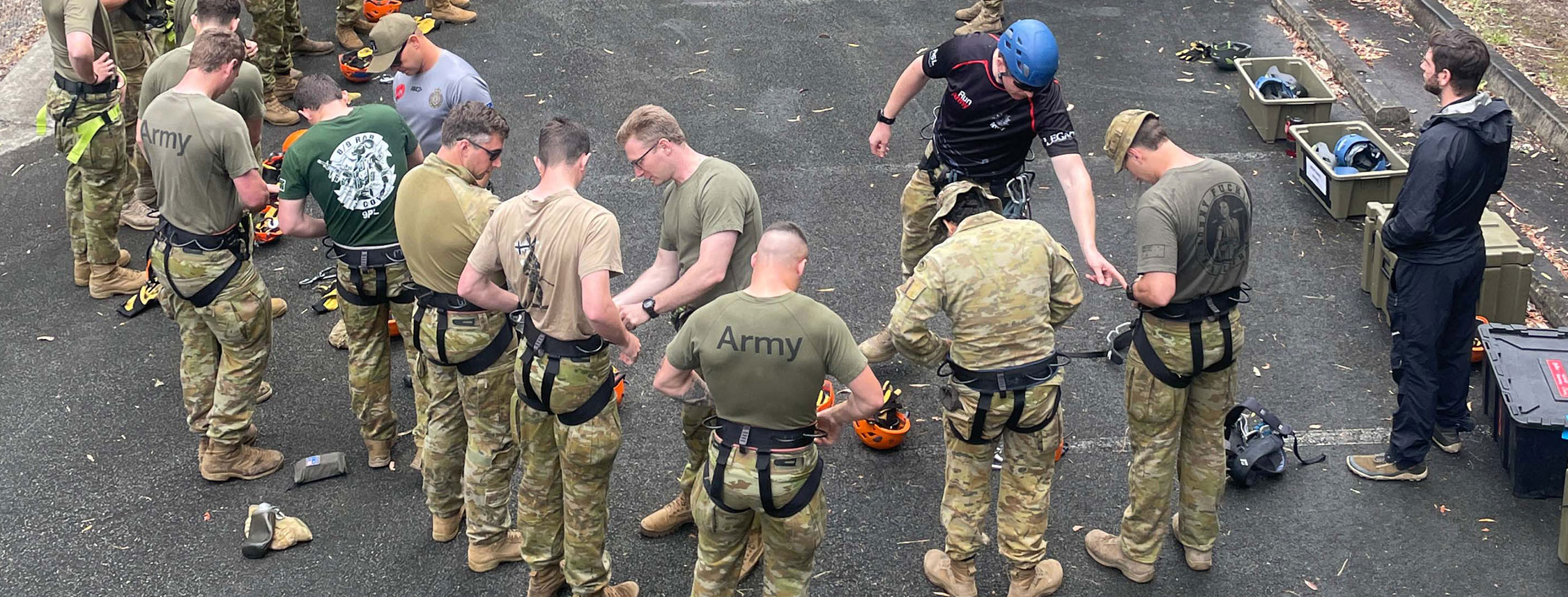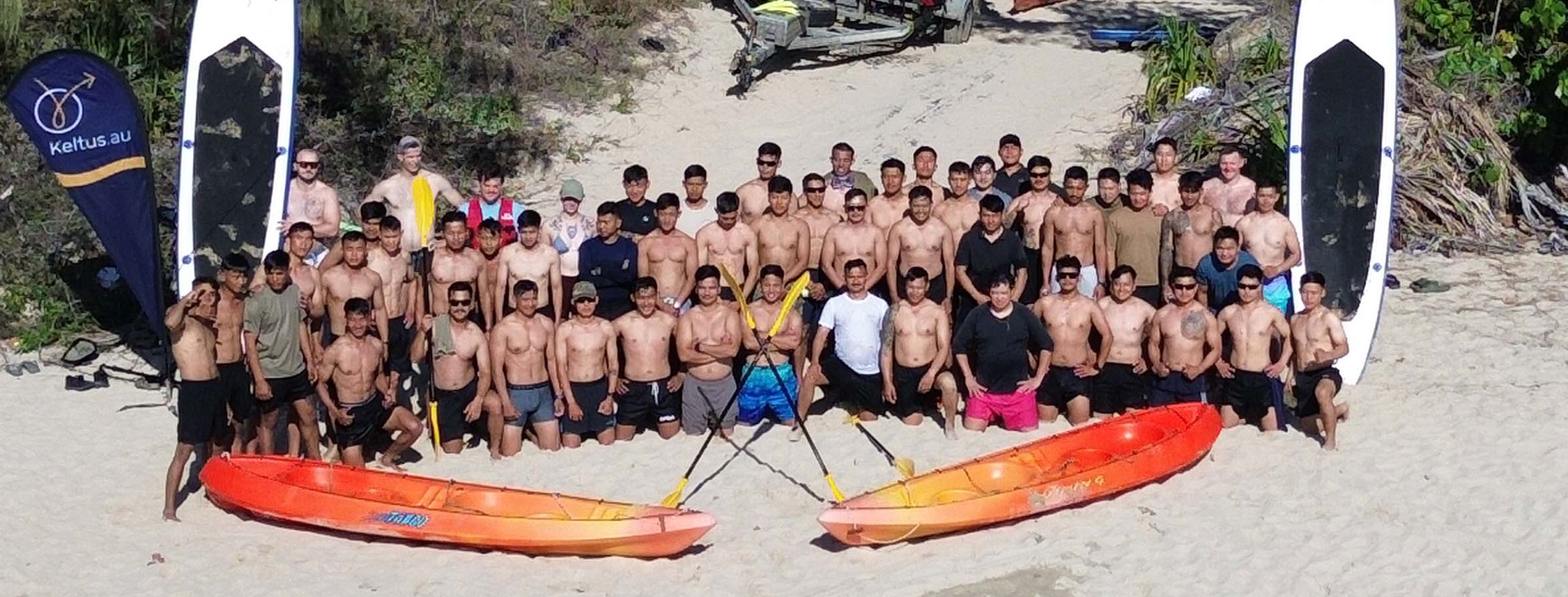
138 soldiers. 8 days. One remote coastal island. Full end-to-end planning and delivery. Sea kayaking and coastal exploration as the training mediums.
The 1st Battalion, Royal Gurkha Rifles is a British Army light role infantry battalion. C Coy is Brunei-based, regionally deployed, and with a recruiting and training pipeline that has not changed shape in two centuries.
Keltus was engaged to plan and deliver an eight-day adventurous training expedition for 138 of its soldiers. C Coy came off a high-tempo training period and needed a program that did two jobs at once: re-cohere the unit after sustained pressure, and reset it before the next training cycle. Adventurous training in a remote environment was the chosen vehicle.
The location was North Keppel Island, Queensland: a national park island off the coast of Yeppoon, in the Keppel Bay group. It sits well off the Australian east coast, accessible only by boat, with no resident population, no infrastructure beyond a single environmental education centre, and no ability to push a delivery van down the road if something runs out.
The selection of an Australian provider for a British Army battalion is its own decision. The Battalion shortlisted on the basis of the provider's ability to absorb the entire planning and delivery load, including the parts that civilian operators usually leave to the unit.
The 138 figure looks like a single number on a brochure. The footprint behind it does not.
Logistics. Moving 138 soldiers from arrival point to North Keppel Island, with their personal kit, their training equipment, their sustainment, and the Keltus operating overhead, on a daily ferry window dictated by tide and weather. Inbound, outbound, and every day-trip movement off the island for sea kayaking and coastal exploration sat inside that window. Miss it and the day collapses.
Accommodation. Bedding down 138 soldiers on an island with no commercial infrastructure, in a footprint that respects national park status and the environmental education centre's operating constraints. Tents, sleeping systems, ablutions, lighting, fire and emergency contingencies, all positioned and broken down across the eight days.
Equipment. The kit list for sea kayaking at battalion scale is not the kit list for a six-person paddle. Sea kayaks at the headcount required, paddles, personal flotation devices in the right size mix, towlines, deck compasses, communications kit, group shelters, group first aid scaled to the number on the water at any one time. All sourced, all serviced, all moved on and off the island. Then everything required for coastal exploration, navigation and on-island activities running in parallel with the on-water serials.
Catering. 138 soldiers, three meals a day, eight days, on an island with no resupply road. That is a procurement, freight, storage, refrigeration and waste management problem before it is a menu. It also has to feed soldiers who have been on the water all day in salt and sun, which shapes the menu more than people expect.
Activity coordination. Sea kayaking and coastal exploration as the primary training mediums, sequenced across the eight days at a tempo that built composure and cohesion without breaking the unit. Instructor team to soldier ratios held to AAAS-aligned standards for the activity and the environment, not below them. Briefings, weather windows, contingency routes, recovery plans, and the daily debrief cycle that turns the activity into learning.
Safety governance. Layered safety systems on the water and on the island. Formal risk assessments per activity and per environment. Marine and land first response. Communications redundancy. Coordination with marine authorities and the national park managing entity. The kind of governance posture a CO can read once and accept.
Keltus owned all of it. The Battalion's chain of command stayed on the training payload.
Keltus manages planning, equipment, logistics and delivery, reducing the burden on unit staff.
The choice of medium and location matters as much as the headcount.
North Keppel Island puts the unit in genuine remoteness. There is no ability to leave easily. There is no shortcut back to the wire. That alone shapes how soldiers approach the training. A coastal sea kayaking serial in open water, in changing conditions, with a small team in a small craft, develops the same thing the Pursuit of Performance Model develops in a cliff descent: composure under controlled pressure, communication when conditions move, and trust in the person whose paddle is in front of yours.
Eight days is long enough to build it under fatigue. The first three days teach the skill. The next three test the application. The final two reveal which behaviours will hold when the unit is back in barracks under pressure of a different kind.
The activity is not the training payload. The training payload is what the activity reveals about the unit, and what the unit takes back from it.
The Coy left the program as an even more cohesive team, reset and ready for the next challenging month of field exercises in Australia.
Three things, beyond the activity report.
138 soldiers across eight days is battalion-scale adventurous training. It is not a command team day. It is not a sub-unit serial. It is the full mass of an infantry battalion, moved, fed, accommodated, equipped, supervised and recovered on a remote island for over a week, by a single provider running the entire program.
Most providers in the Australian adventurous training market top out well below this. Single-day team activities, two-day leadership blocks, occasional multi-day programs at small group sizes. A 138-pax expedition is a different operating problem. It takes a planning footprint that smaller operators do not carry, an instructor and supervisor bench deep enough to staff to AAAS ratios at scale, and the logistics relationships to move kit, food and people in volumes that civilian adventure businesses rarely transact.
Scale is the proof point that decides whether a provider can run your battalion's program, or whether they can run a sub-unit slice of it and call it the same thing.
The 1st Battalion, Royal Gurkha Rifles is a British Army unit with a 200-year operational history. Their selection of an Australian provider for a battalion-scale program is a credibility filter no marketing copy can reproduce.
For an ADF CO or OC reading this case study: the Battalion ran the same kind of provider scrutiny you run. They will have asked the same questions about safety governance, instructor pedigree, capacity to handle the planning load, and credibility with serving soldiers. The Battalion's decision is not transferable evidence of fit for your unit, but it is a serious data point on whether Keltus survives serving-officer scrutiny at scale.
Remote coastal Queensland is materially different to a Blue Mountains canyoning day. The variables that civilian operators rarely have to manage, Keltus had to plan around: tidal access windows, weather contingencies on open water, marine emergency response, sustainment on an island with no road, environmental compliance inside a national park, coordination with the centre operating on the island. None of these are listed on a capability statement. All of them have to work for the program to run.
For units considering a program in any remote environment, on the east coast, the south coast, or further afield, the operating skill stack tested at North Keppel is the one that determines whether a provider can hold the brief together when the conditions deteriorate.
Keltus is veteran owned and operated. The team is built from former ADF leaders, instructors and facilitators with operational deployment experience and outdoor facilitator credentials at the level the work requires. Among the named practitioners running engagements of this kind: a Chief Operating Officer with 17 years of full-time Army service and a decade leading polar expeditions, a Director of Experiential Learning with 20+ years in outdoor education and Paddle Australia accreditation across sea kayaking and white water disciplines, a Head of Adventurous Activities with 25 years in the Army, and the founder, who deployed to Afghanistan in 2010 and 2012.
Full bios are on the About page. The case for engaging former ADF practitioners over civilian outfits with a Defence label is laid out at defence adventurous training.
A 20-minute conversation is the starting point. We use it to understand the training intent, the unit context, the timeframe, and the existing training systems we will work alongside.
For the procurement framework that sits behind a program of this kind, see How to procure adventurous training for your unit.