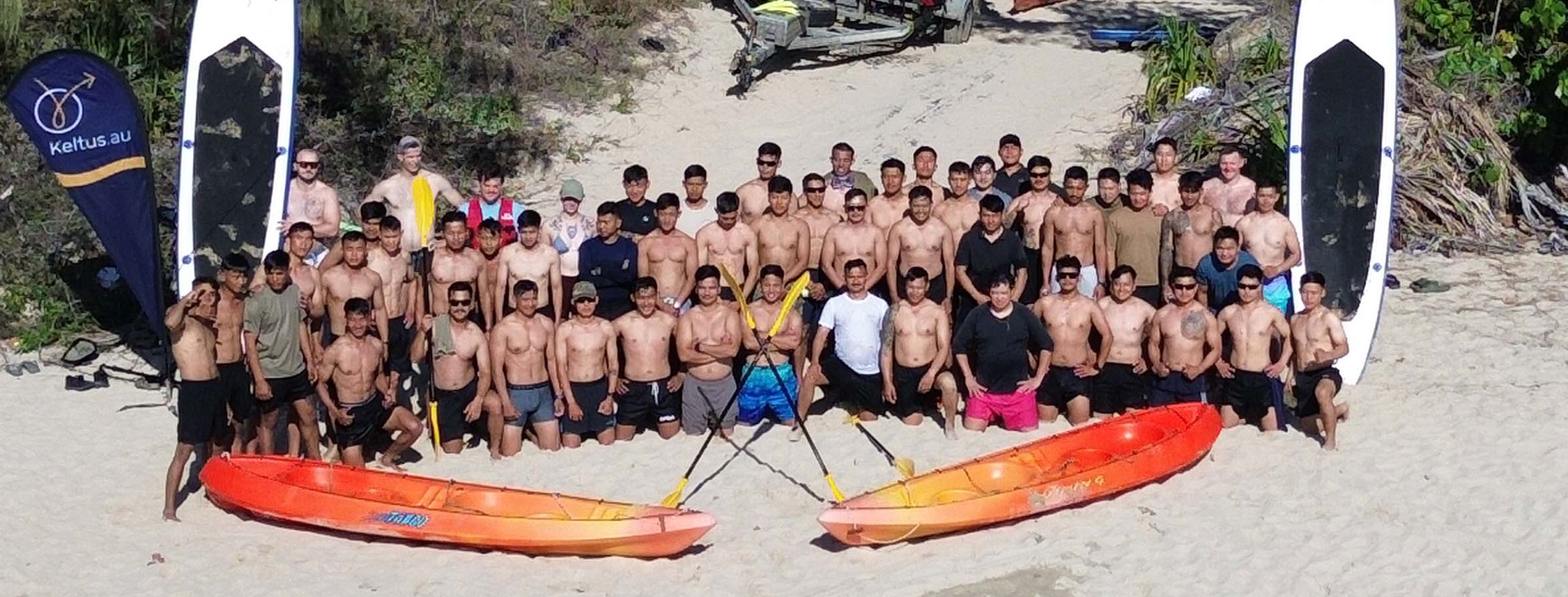
"We continue to provide currency training, mentoring and capability enhancement activities." — Brigade summary, ongoing engagement.
A brigade does not need a provider to deliver one resilience training serial. A brigade needs a capability it can run on its own calendar, year on year, against the unit's training intent, without standing the program up from scratch every cycle.
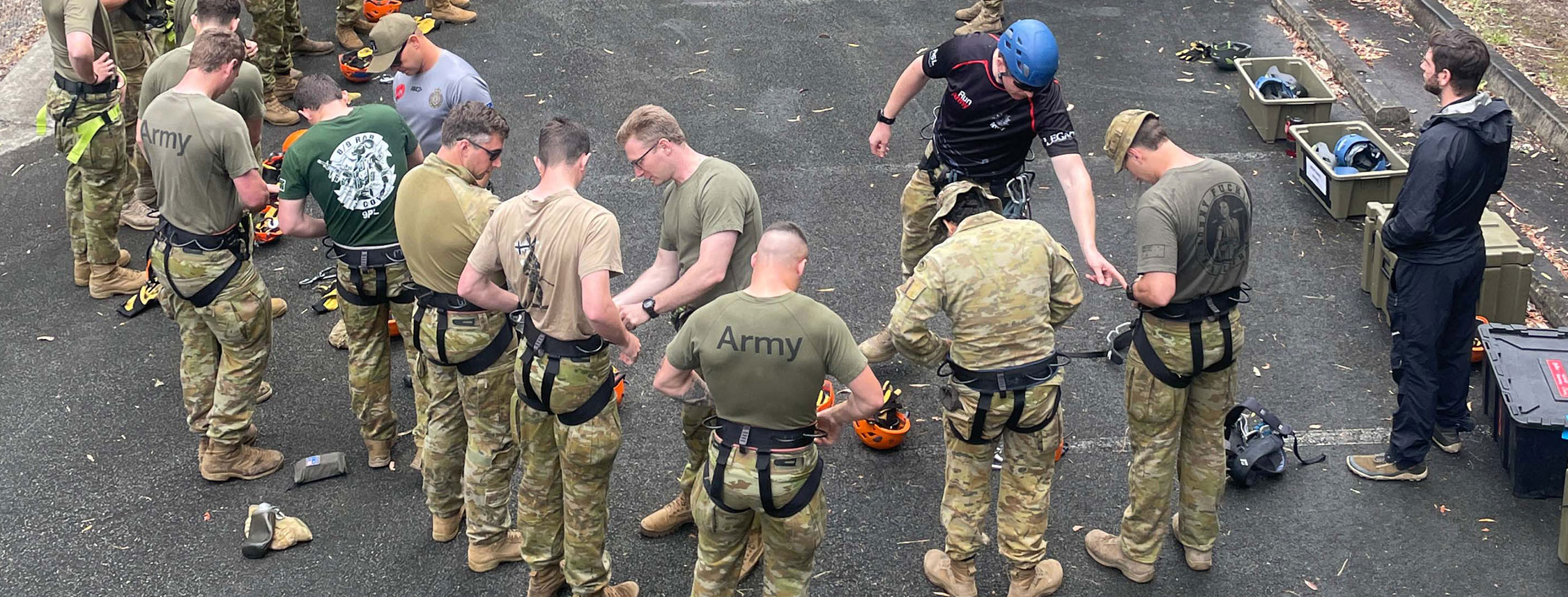
7th Brigade had the asset. The Climbing, Roping and Rappelling Tower at Gallipoli Barracks is a real on-base capability platform: vertical terrain, controlled exposure, the right environment to surface composure and decision-making under pressure. What the Brigade needed was the capability stack to run resilience training on it routinely. Qualified safety supervisors with currency held inside the unit. A governance and quality assurance framework that would survive scrutiny from the formation training cell and from a command-level audit. Site-specific operating procedures that anyone running the tower could reach for. A risk management framework that did not collapse the first time someone outside the original delivery team picked it up.
That is a capability build, not a delivery activity. The work has a 6 to 12 month build phase and a multi-year sustainment phase. The way it is scoped at the front end determines whether the unit gets a serial or gets a capability.
The Brigade asked Keltus to scope it as a capability.
Keltus is veteran owned and operated. The team is built from former ADF leaders, instructors and facilitators who have written doctrine, run resilience training capabilities inside brigades, and continue to sustain those capabilities for the units they originally stood them up for. The methodology is doctrine-aligned. The vocabulary matches the unit's. The safety story holds up under a CO's questions because it was written by people who used to ask those questions from inside the wire.
The other practical reason: this engagement called for the full capability stack at once. Delivery, governance, sustainment. Few providers carry all three. Most stop at delivery, hand over a one-page operating procedure, and leave the unit to backfill the rest. Keltus carries all three because the team has stood up brigade-level capability before.
The work ran across three layers, in sequence and then in parallel.
Keltus trained Brigade personnel as abseiling and climbing safety supervisors. The qualification path was through nationally recognised Vocational Education and Training and built around currency that the Brigade can hold internally. The supervisor cohort was sized against the Brigade's intended training output, not against a notional course completion target. The number of supervisors qualified was the number the Brigade needed to run the training cadence the Brigade Commander named at the front of the engagement.
The qualification is the floor, not the ceiling. A safety supervisor with the qualification but without the currency cycle is not a sustained capability. The Brigade now holds that currency cycle internally, with Keltus on call for refreshers and escalation cover.
Keltus wrote the governance and quality assurance framework that wraps the tower as a training asset. This is the layer most external delivery does not touch.
The framework includes:
The governance framework is the layer that lets the Brigade pass a command-level audit on the resilience training program without external assistance. It is also the layer that lets the next safety supervisor cohort, two postings cycles from now, run the same activity without re-inventing the documentation.
The work did not end at handover. Keltus continues to provide currency training, mentoring and capability enhancement activities. That ongoing relationship is by design.
The reason is structural. Internal supervisors will encounter situations they have not been trained for. Without an external partner on call, the Brigade's risk envelope is wider than it needs to be. With one, the Brigade gets the benefit of the in-house capability at the lower running cost, plus an escalation channel and a refresher rhythm that keeps the supervisor cohort sharp.
This is the layer that turns a capability build into a multi-year capability.
The Brigade no longer pays for external delivery on every resilience training serial. The training runs on the unit's calendar, not the provider's. The capability is documented at a depth that survives a posting cycle. The supervisor cohort holds currency internally. The governance framework is on the shelf and is being used.
The before and after is the difference between a unit that buys a capability per serial and a unit that owns a capability and rents an escalation partner.
If you are a brigade S3, an OC commanding a sub-unit with a tower or a capability platform on base, or a JO inheriting "stand up resilience training" as one of the first tasks on your desk, the 7th Brigade pattern is a reference point.
The pattern is portable. The detail is not.
The longer-form playbook of this work — the capability-handover model written so any brigade can use it as a reference — sits at Standing up an in-house resilience training capability. This case study is the named-engagement story. The playbook is the methodology.