That is not a provider problem. It is a scoping problem. AT cost is downstream of scope, and scope is downstream of the training payload you are trying to deliver. Three units running adventurous training are running three different things. A single-day command-team day, a two-day resilience block and a multi-day expedition for an entire sub-unit carry different cost orders by an order of magnitude. Asking for cost first puts the conversation in the wrong place.
This is a framework for thinking about cost so you can compose a brief that produces comparable quotes, and read those quotes against the right reference points. It will not give you a number. No honest published material can. It will give you the structure to back into a number with the providers you shortlist.
Cost is the answer to a defined scope. Without scope, every quote is against a different program, and the cheapest one is usually the one that scoped the smallest job.
The training payload is what you should be naming first. A unit running AT to develop composure and judgement under pressure for a six-person command team is buying a different thing from a unit running AT for a 100-person sub-unit reset after a high-tempo cycle. Both are valid. They are not comparable on cost until each has a scope wrapped around it.
A junior officer who opens with cost gets three quotes against three different scopes, then has to manufacture a scope after the fact to defend the recommendation to the CO. That is the long way round. It is also the way most failed AT procurements happen, and the answer the cornerstone above goes into in detail is here: Defence adventurous training, delivered by former ADF practitioners.
The shorter way: name the training outcome first, then derive the scope, then ask for cost against the scope. A useful brief is six bullets long. We will get to it.
These are the variables that determine where any AT serial sits on the cost spectrum. None of them are negotiable in marketing terms; all of them are levers you can adjust at the scoping stage.
Single-day, two-day, multi-day and expedition formats are not a sliding scale. They step up in roughly order-of-magnitude jumps as the calendar extends. Each additional day brings instructor days, equipment days, accommodation, catering and another night of safety cover. A multi-day program is not three single-day programs stacked together. It is a different operation with a different planning load.
Instructor staffing scales with the activity standard, not with your budget. Programs delivered to the Australian Adventure Activity Standards (AAAS) carry instructor-to-participant ratios set by the activity, the environment and the participant cohort. A six-person command team and a 138-person sub-unit do not double the instructor team. They scale it according to the ratios the activity requires, plus the safety supervision layer the size of the group calls for.
A canyoning day, a sea-kayaking day and a cliff descent day are not the same cost shape. Each carries different equipment requirements, different specialisation in the instructor team, different access constraints and different safety system loads. Multi-medium programs carry the union of those requirements. The medium follows the training payload, not the other way around. A program that needs composure under exposure points toward vertical terrain. A program that needs sustained team navigation under fatigue points toward extended water or expedition formats.
A program delivered near a major training base is one cost shape. A multi-day expedition on a remote coastal island is another. The logistics cost includes travel, accommodation, equipment movement, ration packs, medical cover, communication infrastructure and any access agreements the location requires. Remote and complex locations add capability load that has to be built into the cost.
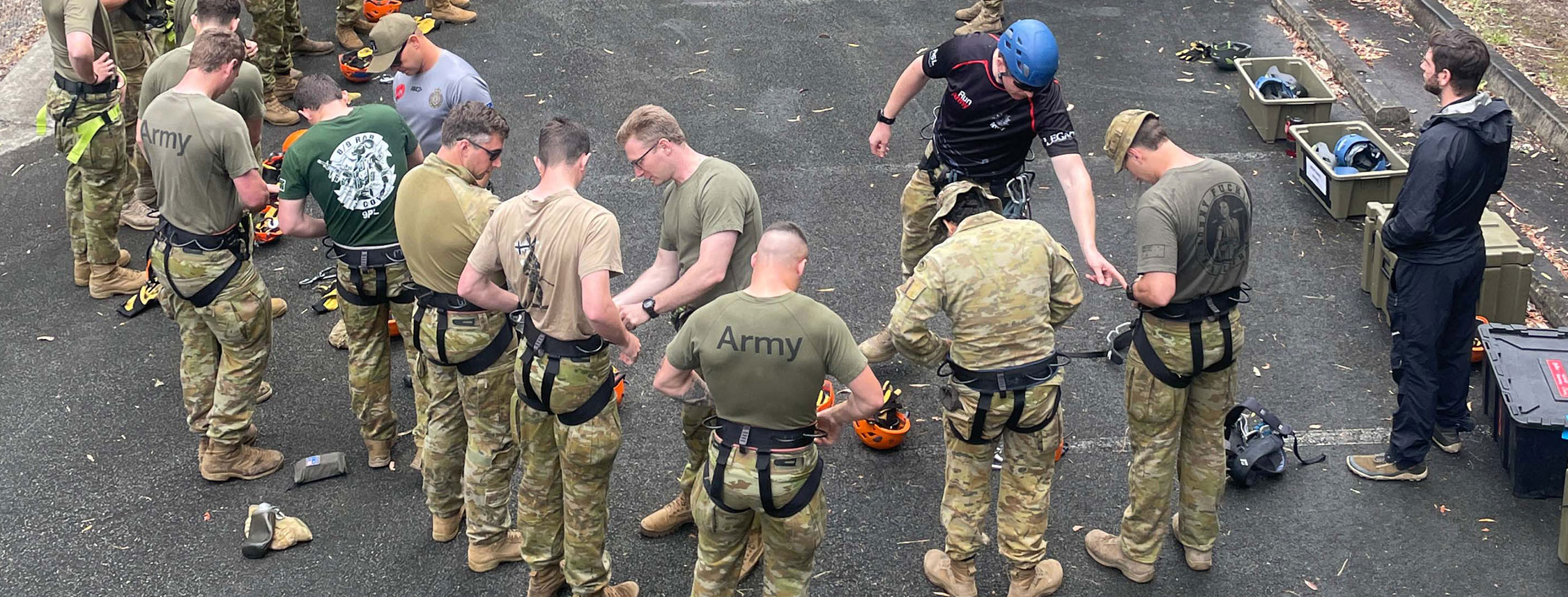
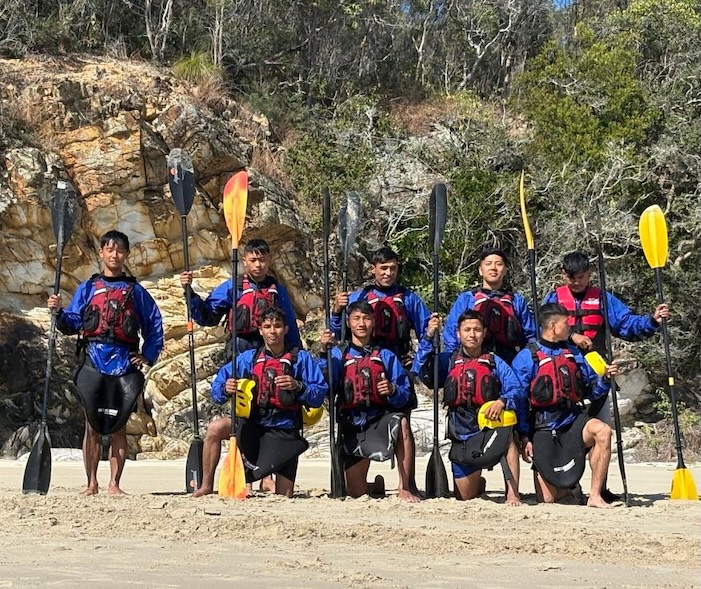
For two of Keltus's published engagements, the cost shapes sit at opposite ends of this spectrum. A single-day command-team canyoning program in the Blue Mountains for the School of Military Engineering is the lower end: short, command-team scale, near a major population centre, no capability handover, instructor team scaled to the activity. An eight-day program for 138 soldiers of the 1st Battalion Royal Gurkha Rifles on a remote coastal island in Queensland is the higher end: multi-day, large unit, full end-to-end logistics including accommodation and catering, instructor team and safety supervision scaled to a complex and remote operation. Both were valid scopes for what each unit was buying. They sit in different places on the cost map because they are different operations.
A program designed to leave the unit with residual capability (qualified safety supervisors, governance frameworks, site-specific operating procedures, currency support) carries higher up-front investment than a one-off delivery. It carries lower long-term cost because the unit is not running the procurement cycle every twelve months.
This is the driver most often missed in single-line-item comparisons. A delivery-only quote and a delivery-plus-capability-handover quote are not comparable on the front-page total. They have to be compared against the cost-to-capability the unit is buying.
Lowest cost is not value if the program does not produce the training payload the unit needs. Highest cost is not value if the provider's overhead is being padded into the quote. Both are real risks, and the procurement frameworks that catch them are not built around price tags.
Three reference points keep the comparison honest.
Cost per participant per day. Crude but useful for comparing providers running the same scope. Watch for hidden costs that appear post-quote: equipment hire treated as a separate line, instructor travel, transport between sites, accommodation surcharges. A clean quote names these in the proposal; a less clean quote names them on the invoice.
Cost per residual capability. When the program is designed to leave the unit with N qualified safety supervisors, a governance framework and the standard operating procedures to sustain in-house delivery, the cost-to-capability ratio is the comparison number. A delivery-only program leaves nothing behind once the trucks roll out. A capability-handover program changes the unit's cost shape for years.
Cost relative to alternative force preparation. What does the time cost when soldiers are pulled off other training. AT done well integrates with the broader training continuum and accelerates what the unit is already trying to develop. AT done badly is in addition to it, and the opportunity cost is the gap it leaves in the rest of the cycle.
These three reference points do most of the work that price comparisons fail to do. Apply all three to your shortlist before you write the recommendation.
The brief is the procurement instrument. A six-bullet brief produces six comparable quotes. A vague enquiry produces three quotes against three different scopes that cannot be compared, and the JO ends up scoping the program after the fact to defend the recommendation.
A working brief covers six things.
Six bullets. Half a page. Send it to the providers on your shortlist. The quotes that come back will be comparable, because the scope they are quoting against is the same.
Against the brief structure above, a Keltus proposal returns the recommended program format, training mediums, location, instructor team, line-item costing breakdown, safety governance summary, and how the program fits into the unit's existing training plan. Five working days from a 20-minute scoping conversation.
The proposal is written to be readable by the CO without translation. It carries the AAAS-aligned safety story in plain language, names the instructor qualifications, names the engagements that anchor the precedent, and gives a clear demarcation of what Keltus runs and what the unit retains. It is the document the JO can lift into a brief annex, not a marketing pitch.
For units rebuilding internal capability, the proposal includes the qualification and capability layer: safety supervisor qualification, governance frameworks, site-specific operating procedures, mentoring and currency support. The cost-to-capability ratio is in the proposal, not implied.
Cost is downstream of scope. The shortest path to a useful number is a 20-minute conversation about what the training is supposed to develop, the unit context, the timeframe, and the existing training systems the program will integrate with. Keltus returns a costed proposal against the brief structure above within five working days.
Discuss your training needs with the team behind this work
For the deeper procurement framework (the six-criterion provider scoring rubric, the brief-section templates the CO will sign first time, and the worked example), the unit AT procurement guide is the brief-building tool. It is vendor-agnostic. Apply it to whoever you shortlist, including Keltus.



.png)